
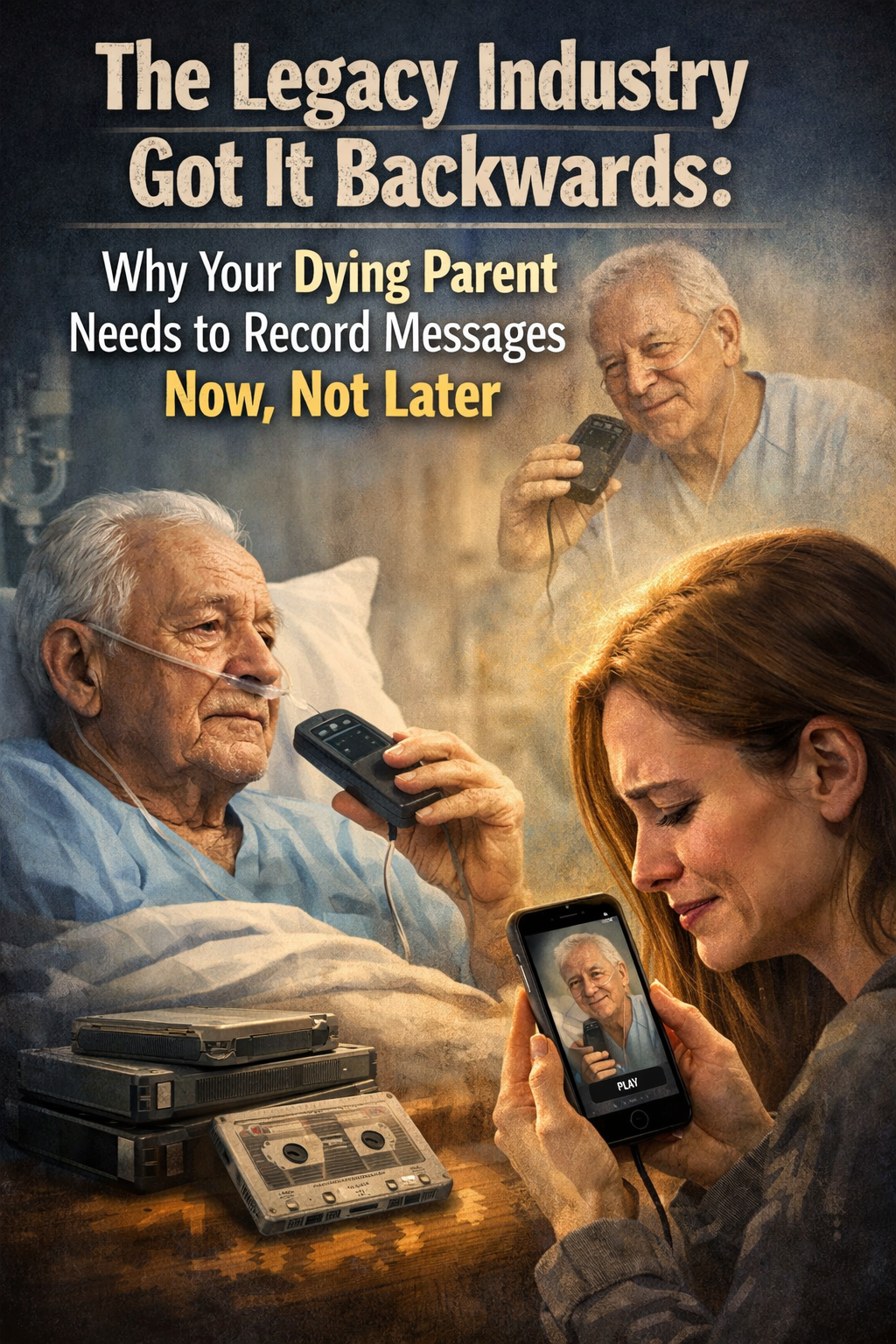
One-third of bereaved families regret not talking about death with their dying loved one.
That’s 33% of families who live with permanent wounds because they waited for the “right time” that never came. The study tracking 678 families who lost someone to cancer found something else – only 5.9% regretted having the conversation.
The math is brutal. You’re six times more likely to regret silence than speech.
I’ve spent decades in ministry watching families navigate terminal illness. The pattern repeats with mechanical precision – everyone knows the conversation needs to happen, everyone waits for conditions to improve, and the transmission window closes while they’re still planning.
The Transmission Window Measures in Days, Not Weeks
Hospice workers describe the timeline in “days” or “hours” but avoid specific numbers. They’ve learned that families hear “weeks” when you say “days” because the brain rejects information it can’t process.
One ICU professional stated it directly: “Conversations are often had too late, especially with individuals with chronic illnesses.”
The window doesn’t close gradually. It slams shut.
Your parent is coherent today. Tomorrow they’re on morphine and can’t form complete sentences. The day after that, they’re unconscious. You had 48 hours and you spent them researching the “best way” to have the conversation instead of having it.
Real-Time Conversations Produce Interference, Not Clarity
Research on end-of-life communication found that people intentionally avoid conversations about death due to “emotional protection” concerns. The study examined “wished for and avoided conversations” and discovered that real-time emotional interference consistently prevents the very discussions people desperately wish they’d had later.
This is why synchronous communication fails during terminal illness.
Your mother wants to tell you she’s proud of you, but she’s crying. You want to ask about her childhood, but you’re crying. Everyone’s managing everyone else’s emotions in real-time, and the actual content never transmits.
The legacy industry built an entire business model on this dysfunction. They charge up to $7,000 for biographical videos that take “hours of getting to know subjects before filming.” They position legacy work as expensive retrospective storytelling for people with resources.
They treat time as renewable and communication as entertainment.
What Families Actually Need (And The Industry Doesn’t Provide)
A mother dying of metastatic cancer recorded messages for her children’s future milestones – high school graduation, 21st birthday, wedding, first child. Her daughter later said: “It was so comforting knowing that she still had some wisdom for us for those seasons.”
That’s not nostalgia. That’s reconciliation work.
The mother also prepared a cookbook with family recipes, gifts for future children, and turned her rings into her daughter’s wedding ring. She understood that legacy preservation is multi-layered transmission, not a single transaction.
But here’s what the industry missed – she didn’t need a $7,000 production crew. She needed a framework for what to say and a mechanism to deliver it at the right moment in the future.
The technical barrier isn’t the problem. The conceptual barrier is.
The Framework: What to Record Before the Window Closes
Milestone Messages
Record separate videos for specific future events: graduations, weddings, births of grandchildren, career achievements, personal struggles. Your daughter doesn’t need your wisdom about marriage on the day you die. She needs it the week before her wedding when she’s terrified.
Origin Stories
Explain why you named them what you named them. Describe the day they were born. Tell them about their personality as a child and how you saw them develop. These aren’t sentimental memories – they’re identity anchors for when you’re not there to remind them who they are.
Practical Wisdom
Record your actual advice about money, relationships, career decisions, raising children. Not generic platitudes – specific guidance based on what you learned the hard way. Your son needs to know how you handled failure, not just success.
Unfinished Business
Say the things you’ve been avoiding. Apologize for specific failures. Explain decisions they never understood. Release them from obligations they think they owe you. This is reconciliation work, and it cannot happen after you’re dead.
Permission and Release
Tell them explicitly that they’re allowed to move forward, remarry, make different choices than you made, disagree with your beliefs. Give them permission to live their own lives without carrying your expectations as permanent weight.
Why Asynchronous Transmission Solves What Real-Time Conversation Cannot
When you record a message for future delivery, you remove the real-time emotional interference that prevents authentic transmission.
Your father can say he’s proud of you without watching you cry in response. You can ask questions without managing his emotional state. The content transmits cleanly because reception happens separately from transmission.
This is why none of the parents who talked with their dying child about death regretted it, but nearly half of parents who sensed their child was aware of impending death and stayed silent carried permanent regret.
The conversation itself doesn’t create trauma. Silence creates trauma.
The Industry Treats Preservation as Nostalgia Instead of Urgent Work
Professional legacy videographers position their services as historical documentation for people with time and money. They’re solving the wrong problem.
Families facing terminal illness don’t need polished biographical films. They need a framework for capturing wisdom, stories, and love before the transmission window closes. They need practical steps for recording messages that will be delivered at future milestones.
They need to understand that this is reconciliation work, not entertainment.
The research is clear: 86% of families facing terminal illness didn’t receive enough information about psychological impacts. Studies consistently show “much is left unspoken” even when death is imminent. Indirect or avoidant discussions were more common than direct conversations.
The barrier isn’t technical capability. The barrier is the false belief that tomorrow is guaranteed and that the “right time” will announce itself.
What Happens If You Wait
Palliative care nurse Bronnie Ware documented deathbed regrets across years of bedside care. The third most common: “I wish I’d had the courage to express my feelings.”
Many people suppressed their feelings to keep peace with others, settling for “a mediocre existence” and never becoming who they were capable of becoming. Every male patient she nursed regretted missing their children’s youth and their partner’s companionship.
These regrets don’t form at the moment of death. They accumulate across years of avoided conversations and unexpressed truth.
Your parent is dying. The transmission window is measured in days. You can record the messages now, or you can join the 33% who carry permanent regret because they waited for conditions that never improved.
The choice is binary, but the window is not.
What are you waiting for?
This is why iLoveView
Leave a Reply
You must be logged in to post a comment.