
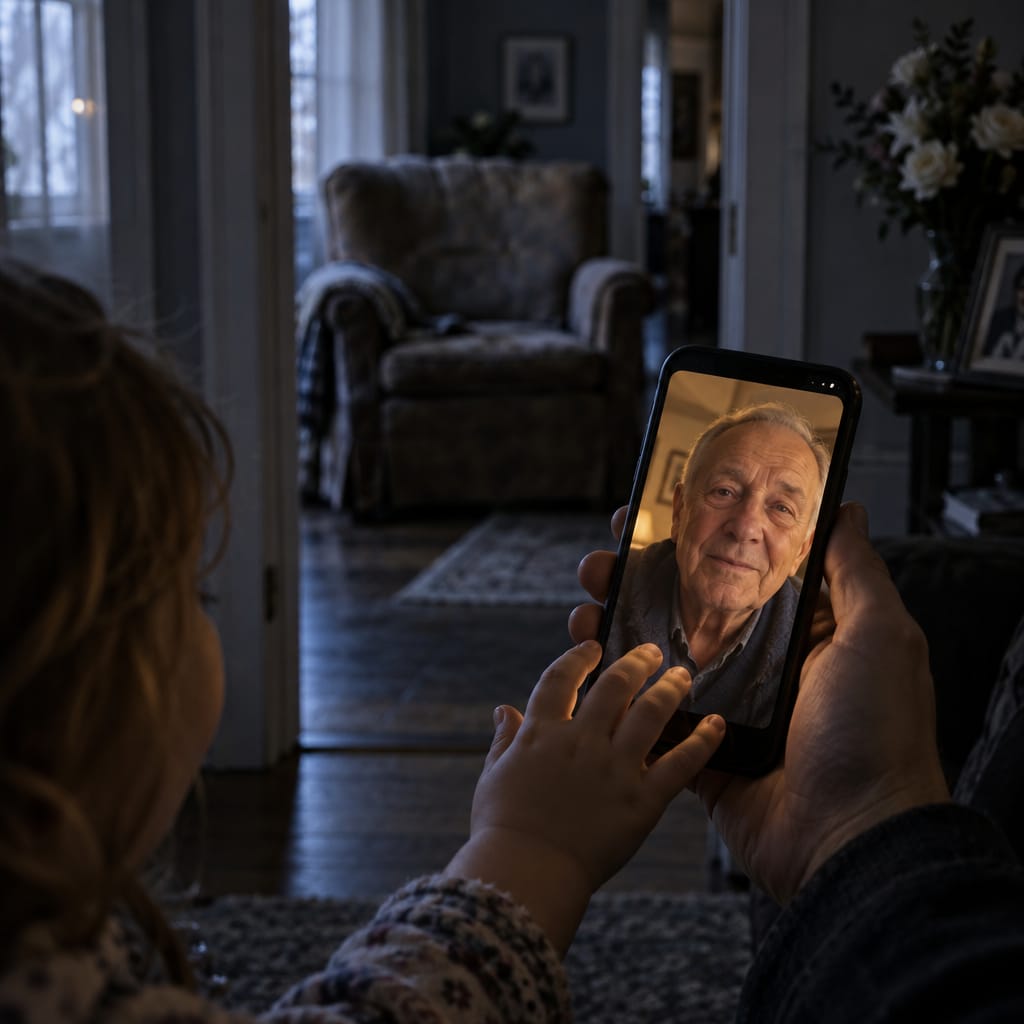
A text from your dad is a text. A video of your dad saying what he actually meant is something you watch at his funeral and share with your kids.
I’ve spent years sitting with people at the end of their lives. In one study of bereaved families, 17.5% disagreed that they had been able to say goodbye. That number represents living rooms full of people scrolling back through old texts, looking for something that was never captured in the first place.
This is the problem I built my life around, and it’s commonly overlooked until the window closes.
What a Message Actually Carries
A message carries information. It tells you what someone said, when they said it, and roughly what they wanted from you. For logistics, that works fine.
The research backs this up. Text-based media performs best in task-oriented conversations, because written words strip out the facial expressions, tone, and hesitation that carry the emotional weight of what’s being said.
Think about the last hard conversation you had over text. The words arrived. The person didn’t.
That gap matters more than we admit. When your father types “I’m proud of you,” you read it in your own voice. You fill in his tone from memory. And memory fades faster than we’re comfortable acknowledging.
What a Moment Preserves
A moment preserves the person. The pause before the sentence. The way his eyes move when he says your name. The thing he almost didn’t say, and then said anyway.
Your brain treats these two experiences differently at a biological level. People remember roughly 80% of what they see and about 20% of what they read. A recorded moment creates a fundamentally different memory trace than a line of text, because over half the brain is dedicated to processing visual information.
Here’s the standout truth I keep returning to:
A text tells you what someone said. A video shows you who they were when they said it.
That difference compounds over decades. Your children never met your grandmother. A recorded moment lets them hear how she laughed. A message archive gives them typing patterns.
Why Smart People Avoid This
I’ve noticed a pattern among intellectually sharp people, and I say this with respect because I understand the reasoning. They rationalize the avoidance beautifully.
“We text every day, we’re close.” The frequency of contact gets mistaken for depth of preservation. Daily contact feels like connection, and it is, in the present tense. It leaves almost nothing behind.
There’s also the discomfort of intentionality. Recording yourself saying what you actually mean requires you to know what you actually mean. That’s harder than sending a heart emoji, and the difficulty is exactly why it’s valuable.
The rationalization has a cost, and the cost arrives all at once, on a day you don’t get to choose.
Intention Beats Volume
This is where my thinking diverges from the entire architecture of modern communication. The platforms measure success in volume, frequency, and time spent. I measure success in whether the people you love will understand who you were after you’re gone.
Those two goals produce completely different behavior. Volume produces ten thousand messages that say almost nothing. Intention produces one recording that says everything, and that recording becomes an heirloom.
So my recommendation is strong and specific.
Pick one person. Record five minutes of what you actually mean, without performing, without polishing, without an audience. Say the thing you’ve been meaning to say, in your own face and your own voice.
Do it this week. The people who receive these recordings after a loss describe them as the most valuable thing they own, and the people who waited describe the silence.
Time is the only resource you can’t get back. A message spends it. A moment preserves it.
Here’s my question for you: whose voice would you give anything to hear again right now, and who will be asking that same question about yours?
Leave a Reply
You must be logged in to post a comment.