A father with terminal cancer recorded a message for his daughter’s wedding day.
He died when she was 12.
At 28, his voice walked her down the aisle.
Philip Hargreaves knew he wouldn’t be there. Esophageal cancer doesn’t negotiate. So he wrote nine letters to be delivered throughout his daughter Freya’s lifetime—birthdays, graduations, her wedding day. Twenty years after his death, she opened the envelope and read: “Today is your day, enjoy everything about it. Laugh and cry. Be happy and confident.”
She said it made her feel like he was “really there.”
But here’s what nobody talks about: letters aren’t enough anymore.
The Problem With Waiting Until It’s Too Late
When Jason Halbert got diagnosed with terminal brain cancer, his daughters Ashlee and Kaylee knew their weddings were years away. The chances of their father being there? Slim to none.
So they recorded the father-daughter dance in advance.
Each daughter received two videos—one of the actual dance, and one private interview where Jason offered words to be shared publicly “for when the time comes.” His daughter Kaylee said: “I hated that we had to do it but was grateful that we got to.”
You read that right. Grateful.
Because the alternative—silence—is worse than the discomfort of recording.
German research on family audiobooks for terminally ill parents found that children struggle to maintain memories of deceased parents. One person reported: “My children are 5 and 7 years old. After their father died, they said at some point that they couldn’t remember Dad’s voice, so we listened to the audiobook.” The study confirmed that “the process of remembering is strongly influenced by the experience of hearing the voice of the deceased parent.”
Not reading their words. Hearing their voice.
What I Learned Recording Videos in Case There Was Never a Tomorrow
I started recording videos for my kids when I was driving trucks cross-country.
I missed my son’s graduation awards ceremony. That was the moment I couldn’t ignore anymore—the realization that I was trading presence for paychecks, and my kids were growing up in the gaps between my trips home.
So I recorded everything that needed to be said. Values. Lessons I’d learned. What I hoped for their futures. Family stories only I could tell. I stored them on my computer with instructions left with people who would follow through if I didn’t come home.
I didn’t know it then, but I was building the prototype for what would become iLoveView.
The transition from truck driver to ordained ministry happened gradually over five years. I took theology courses while still driving, got ordained in 2019, and now serve full-time as a pastor with a broad reach—hospice, prison chaplaincy, people breaking addiction, deliverance work.
Being with people in their final days completely transformed my perspective on those early videos.
I realized that what people need at the end isn’t motivational content or self-help tips. They need genuine presence, honest conversations about meaning, and someone who isn’t afraid to sit with them in their pain and uncertainty.
The Deathbed Scene That Changed Everything
I sat with an elderly woman who kept reaching for her daughter’s hand, trying to tell stories about their family history—names, dates, places that only she knew.
Her daughter was frantically trying to write everything down.
But mom was so weak. The moments were so fragmented. What haunted me most was watching her struggle to share decades of wisdom and love when there just wasn’t enough time or energy left.
That’s when I realized people need a way to preserve these precious memories and messages before it’s too late—when they still have the strength and clarity to share what truly matters.
Research on grief consistently shows that “the heaviest burden is the weight of the words left unsaid.” People reflecting on loss often share moments they could have expressed their feelings—whether it was an apology, a word of appreciation, or simply telling someone they love them. These unspoken words haunt us. They make the loss even more painful as we wish for just one more chance to speak our hearts.
The finality of death brings a harsh realization: there are no more chances to communicate.
What Children Actually Want to Hear
When researcher Gaby Eirew surveyed thousands of mourners about what they most missed after losing a parent, she discovered something specific.
“The single most important thing that people said they wanted to hear was that their parent was proud of them, that they loved them and to hear them say that with their name. So often people were told that their mum or dad loved them so much, but they needed and wanted to hear it.”
Not read it in a letter.
Not hear it from someone else.
Hear it in their parent’s voice, with their name spoken out loud.
Pat McNees, president of the Association of Personal Historians, says legacy videos capture what photos and letters cannot. “That’s really what a child wants to know about a deceased parent—that their parent loved them, that they were important.”
Kate Carter, founder of LifeChronicles, which has recorded 700 legacy videos, notes: “When Fawn’s children see themselves with her on camera, they will re-experience being in her presence after she’s gone.”
Presence. Not just information. Presence.
The Cost of Building What Needed to Exist
I didn’t have tech experience or funding when I started building iLoveView.
I taught myself basic web development at night while working my day job. Built the first version on WordPress with customized plugins. It had glitches. Tried again—fewer glitches, but security was basic.
Then I spent tens of thousands to get a version that worked. After a year of investment, time, and process, the developers told me they couldn’t continue because of the limitations of the tech. The plugins became obsolete.
So I hired another company that said they’d customize it from scratch. They offered a price tremendously lower than any other fully custom code offer I’d ever had.
They were a scam. They took me for several grand.
This was right after the first failure. Both challenges, back to back, ended with me setting the platform on the shelf for over a year.
Most people would have walked away.
But I couldn’t. Because I kept sitting with people who were running out of time, watching them struggle to say what needed to be said, watching their families scramble to capture fragments of wisdom that should have been preserved years earlier.
One day I was experimenting with an AI site simulator that could create UI/UX from prompts. It created the interface decently, but there was no backend. That’s when I went searching and found the developer I’m currently working with—someone who fully saw the vision and the power behind what could be done.
The platform is ready now. The vision is clear.
The Urgency You’re Not Feeling Yet
Studies on end-of-life regrets reveal that many people share similar reflections. One major theme emerges: “Not spending more time with the people I love.”
Looking back on their lives, dying patients consistently express that they wish they had spent more time with loved ones—whether their family members or close friends. These feelings can add to a person’s stress, anxiety, and guilt as they cope with their terminal illness.
You’re reading this thinking it doesn’t apply to you yet.
You’re healthy. Your parents are still here. Your kids are young. There’s time.
But here’s what I learned sitting at bedsides: everyone thinks they have more time than they do.
The truck driver thinks he’ll make it to the next ceremony. The healthy parent thinks they’ll record those videos next year. The daughter thinks she’ll have one more conversation with dad before it’s too late.
And then time runs out.
Philip Hargreaves knew he was dying, so he wrote nine letters. Jason Halbert knew he was dying, so he recorded the dances. The elderly woman I sat with didn’t have enough strength left to finish her stories.
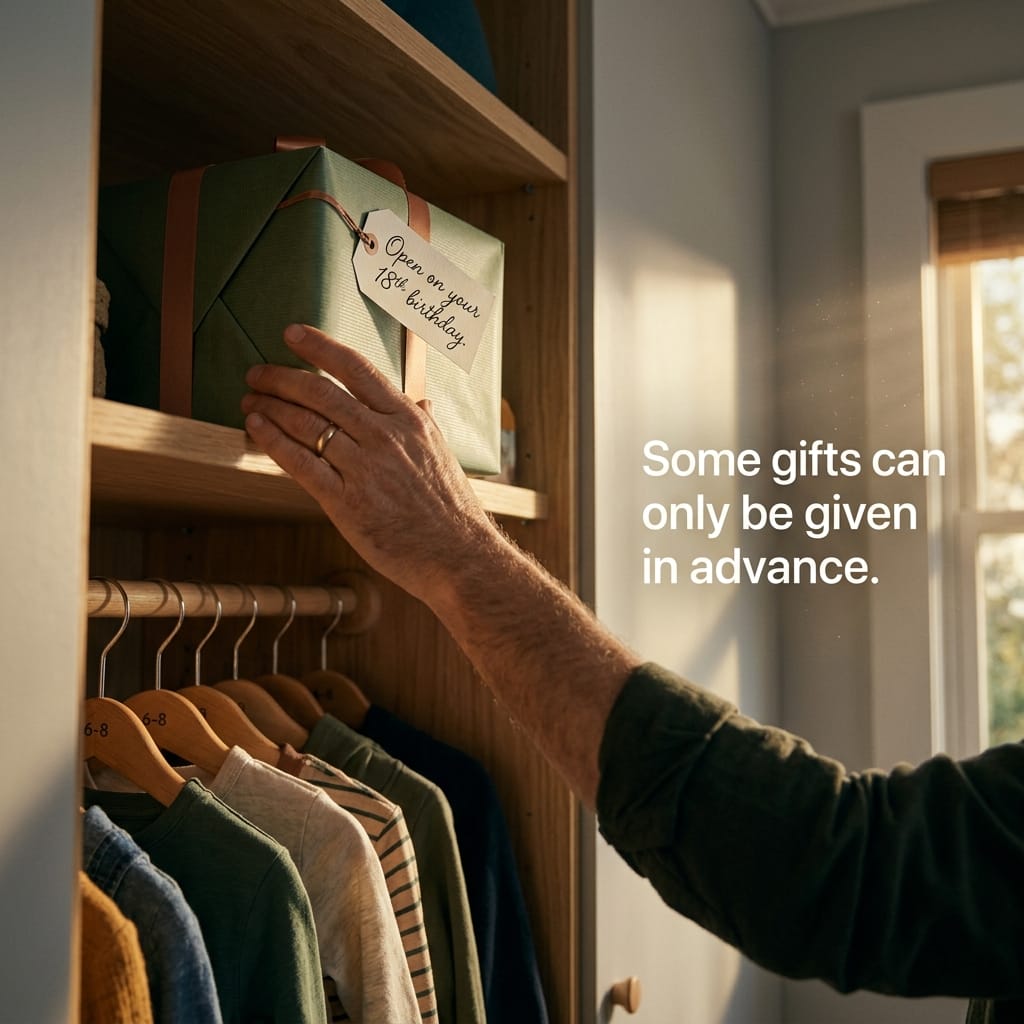
Some gifts can only be given in advance.
The question isn’t whether you’ll need this eventually. The question is whether you’ll do it while you still have the strength, clarity, and time to say what needs to be said—in your voice, with their names, so they can hear you long after you’re gone.
Because the alternative is leaving them with silence and the weight of words that were never spoken.
Leave a Reply
You must be logged in to post a comment.